Your perfect course to contribute to medical emergency care, tailored to your preference. It requires self-study and is therefore very rewarding
Program Details
PADI Emergency First Response. This is what it does for you.
Your perfect course to contribute to medical emergency care, tailored to your preference. It requires self-study and is therefore very rewarding.
Our Emergency First Response training is geared to build on confidence, adressing divers with the ambition to promote to the event of medical urgencies or emergencies.
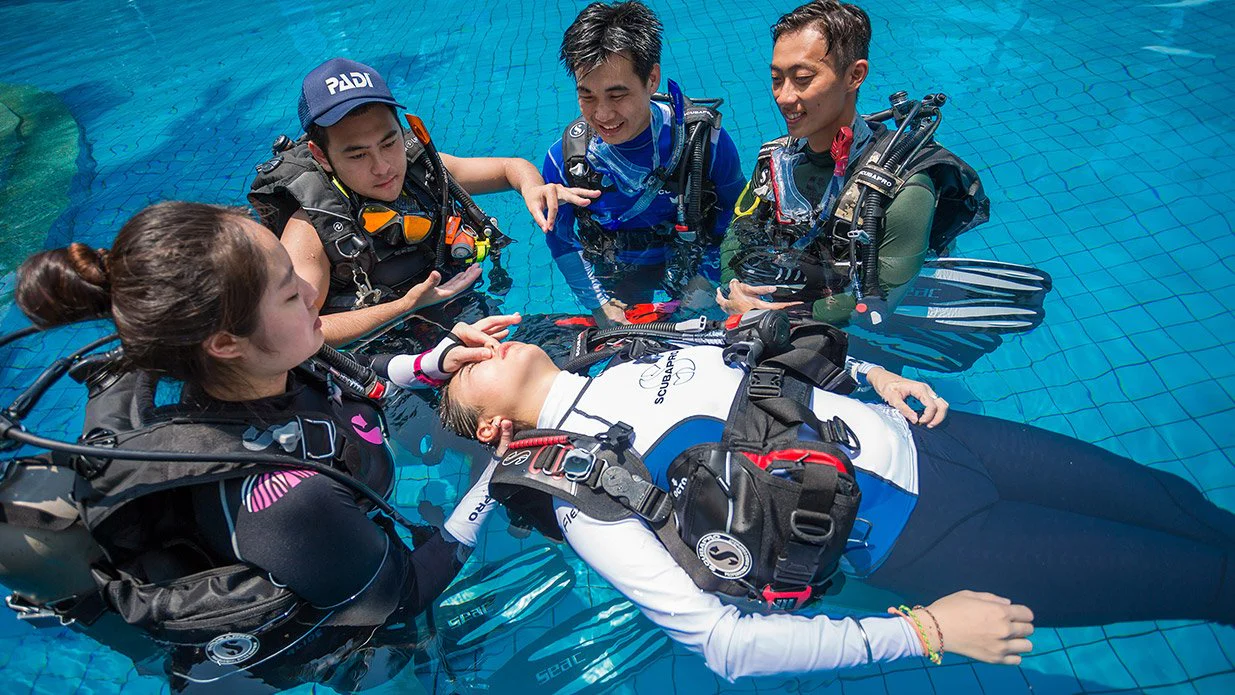
You will learn about emergency care as a participant. In a calm learning atmosphere, we educate you how to handle situations. You will discover that these courses include fast reference cards, videos, and self-study guides. It will allow you to begin learning immediately.
The main goal of Emergency First Response training is to boost lay rescuers’ self-assurance and readiness to act in the event of a medical emergency.
All professional-level ratings and the PADI Rescue Diver course’s CPR and first aid training requirements are satisfied by the Emergency First Response courses.
PADI First Response Emergency. You are eligible in this way.
You must be at least 18 years old and must have had Emergency First Response Primary and Secondary Care (CPR and First Aid) training within the past 24 months.
PADI First Response Emergency. What you will discover is this.
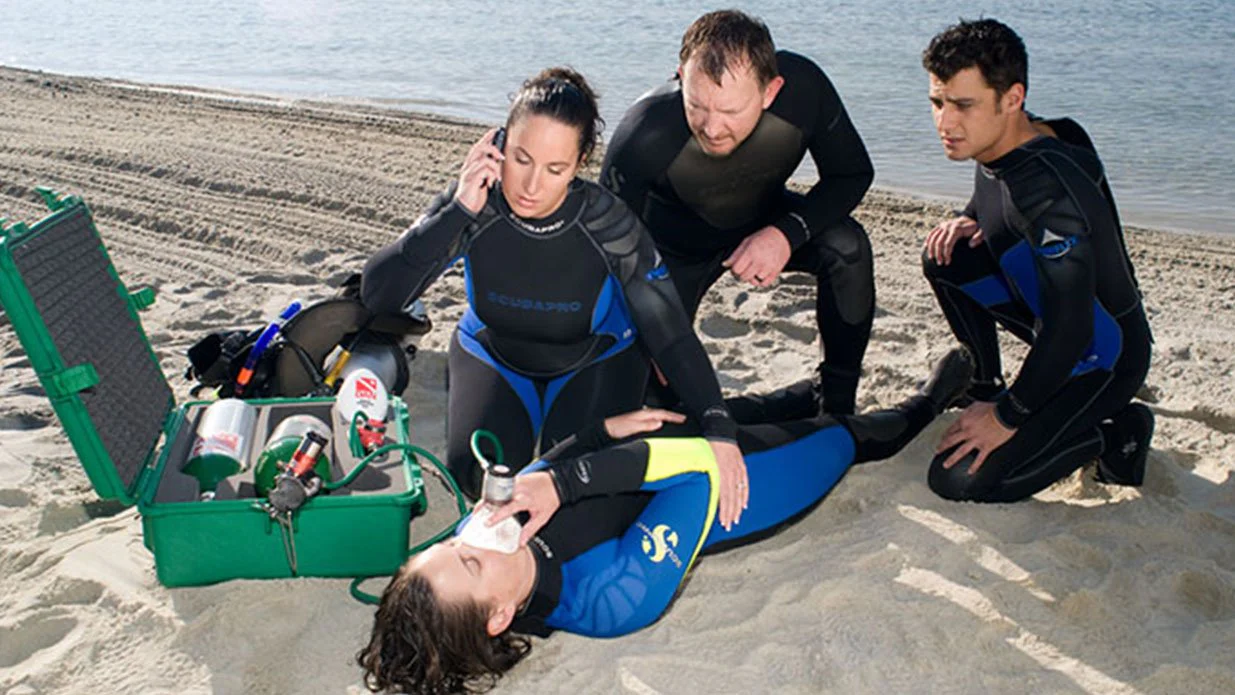
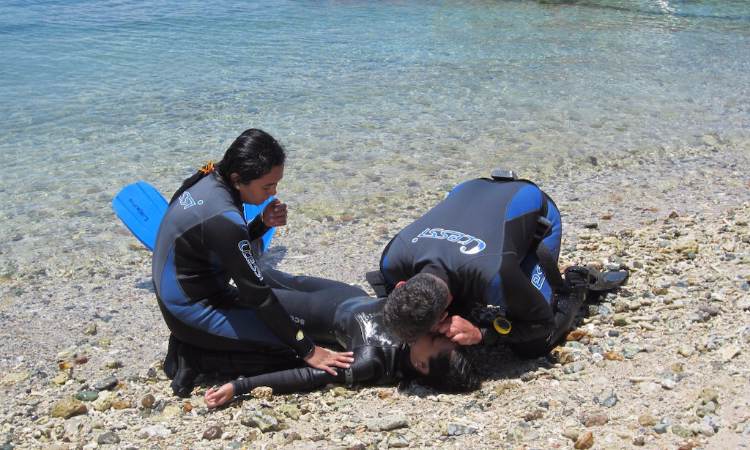
- Primary Care (CPR): This course teaches you how to respond to life-threatening situations. Eight techniques for helping patients who are not breathing, have no heartbeat, may have suffered a spinal injury, are in shock, or are bleeding profusely will be practiced. While you wait for emergency medical assistance to come, you will learn how to administer cardiopulmonary resuscitation (CPR) and keep an eye on the patient to give them the best chance of life.
- First Aid (secondary care) — Emergency medical services are occasionally unavailable or delayed, and many medical issues do not pose a threat to life. This training teaches you how to administer first aid that minimizes the chance of additional injury and relieves pain. You will acquire the ability to evaluate
- Care for Children: This program enables learners to acquire, hone, and put into practice emergency care techniques tailored to assisting young patients with medical crises. It is intended for anyone who work with children or are frequently called upon to handle child-related crises. Primary Care (CPR) and Secondary Care (First Aid) courses are frequently combined with this one.
- CPR & AED: The main goals are to educate participants how to operate an automated external defibrillator (AED) and provide CPR instruction. The CPR & AED course satisfies the need for this training as mandated by the government or company. Programs that teach First Aid at Work frequently incorporate this course.
- First Aid in the Workplace Government requirements in several regions of the world require more extensive workplace CPR and first aid training. Programs created for First Aid at Work in these sectors incorporate extra subjects and abilities to satisfy needs while adhering to the simple EFR training methodology.
- EFR Refresher: Every 24 months, brush up on your first aid and CPR knowledge. The EFR Refresher course is intended to do that. By emphasizing essential skills, the training keeps you current and prepared to help when required.
PADI First Response Emergency. Here’s how to get started.
Press booking is now available, and you may choose when you would want to begin your Egypt Divers course. Following that, you will receive the study resources you need to begin acquiring the required expertise from your Egypt Divers teacher. Participants in the course practice applying skills in a stress-free learning environment while learning easy-to-follow emergency care procedures.